


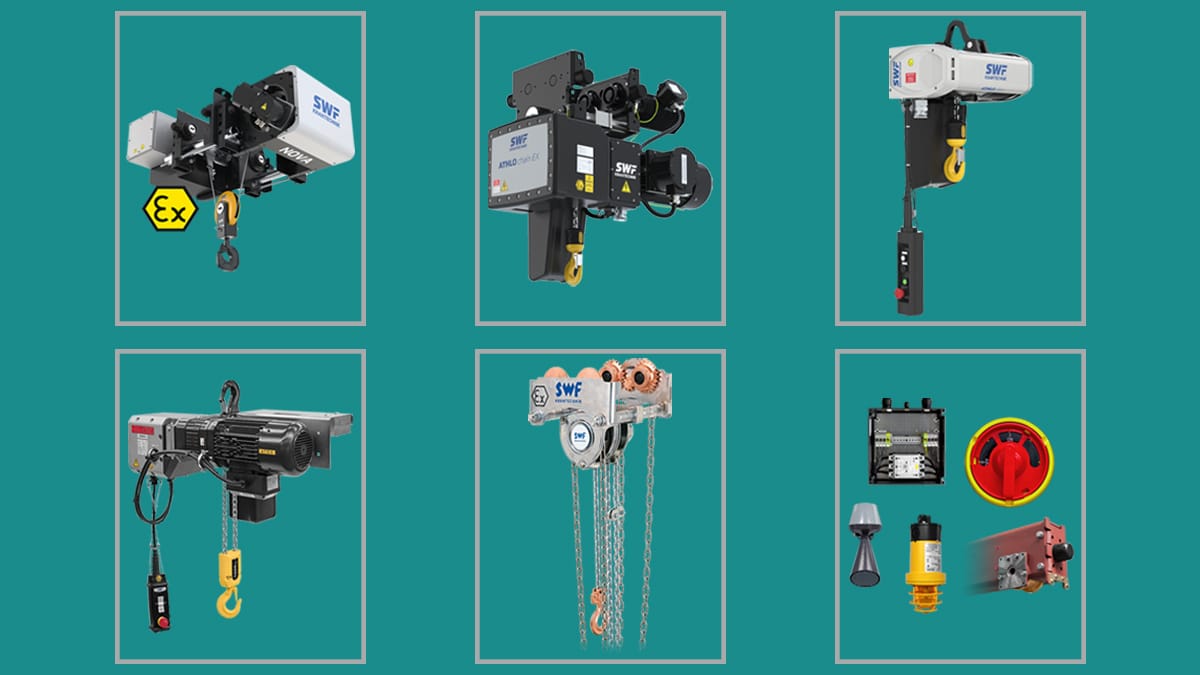
What is an Explosion Proof Crane? Applications of Explosion Proof Electric Cranes
Lifting equipment used in industrial facilities must meet significantly higher safety standards in certain operating environments. Particularly in areas where flammable gases, chemical vapors, or combustible dust are present, standard crane systems may pose serious risks.
One of the safest solutions used in such hazardous environments is Explosion Proof (Ex-proof) crane systems.
An explosion proof electric crane is a specialized lifting system designed to operate safely in environments where explosive atmospheres may occur. These cranes are manufactured with specially designed motors, electrical components, and protection technologies to prevent the risk of ignition or explosion.
In this article, you will find detailed answers to the following questions:
- What is an explosion proof crane?
- Where are explosion proof electric cranes used?
- What is ATEX certification?
- What are the key features of explosion proof crane systems?
What is an Explosion Proof Crane?
An Explosion Proof (Ex-proof) crane is a type of lifting system specifically designed to prevent ignition sources in environments containing explosive gases or combustible dust.
In standard crane systems, electric motors or control components may generate sparks under certain conditions. However, explosion proof electric cranes incorporate advanced safety technologies that eliminate this risk.
Key Features of Explosion Proof Cranes
- Explosion-proof motor systems
- Spark-resistant electrical components
- Static electricity protection systems
- ATEX and IECEx certified equipment
- Specially insulated control panels
These features enable safe lifting operations in hazardous environments where explosion risks are present.
Where Are Explosion Proof Electric Cranes Used?
Explosion proof crane systems are widely used in various hazardous industrial environments.
Oil and Gas Facilities
Oil refineries and natural gas processing plants contain high concentrations of flammable gases. Therefore, lifting equipment used in these facilities must comply with Explosion Proof safety standards.
Chemical Industry
Chemical manufacturing plants often contain solvents, volatile gases, and explosive chemicals. Explosion proof crane systems ensure safe lifting operations within these environments.
Paint and Solvent Production Facilities
During paint manufacturing processes, solvent vapors are released, which are highly flammable. Therefore, lifting equipment used in such facilities must be ATEX-certified explosion proof cranes.
Food Processing and Flour Mills
Many people are unaware that dust explosions pose a serious risk in food production facilities. In particular, flour mills can generate explosive dust atmospheres, which require explosion-proof equipment.
For this reason, explosion proof lifting equipment is essential in these environments.
What is an ATEX-Certified Explosion Proof Crane?
In Europe, equipment used in explosive environments must comply with specific safety regulations. One of the most important standards is the ATEX Directive.
An ATEX-certified explosion proof crane is a lifting system that has been tested and certified for safe operation in explosive atmospheres.
Under the ATEX directive, hazardous environments are classified into different safety zones.
ATEX Zone Classification
- Zone 1: Areas where explosive gas atmospheres are likely to occur during normal operation
- Zone 2: Areas where explosive gas atmospheres may occur occasionally
- Zone 21: Areas where combustible dust may be present during normal operation
- Zone 22: Areas where combustible dust may occur occasionally
The appropriate explosion proof crane system must be selected according to these zone classifications.
ATEX Gas Group Classification
Explosive gases are categorized according to their ignition and explosion characteristics.
Gas Groups
The classification from highest to lowest hazard level is as follows:
| Protection Class | Gas Type |
| IIC | High-risk gases such as acetylene and hydrogen |
| IIB | Medium-risk gases such as ethylene |
| IIA | Lower-risk gases such as propane |
Maximum Surface Temperature Classes
The maximum allowable surface temperature classes are:
- T6 – 85°C
- T5 – 100°C
- T4 – 135°C
- T3 – 200°C
- T2 – 300°C
- T1 – 450°C
These limits ensure that equipment surfaces remain below the ignition temperature of hazardous gases.
ATEX Dust Group Classification
Equipment used in combustible dust environments is also categorized according to dust characteristics.
Dust Groups
| Group | Description |
| IIIC | Conductive dust |
| IIIB | Non-conductive dust |
| IIIA | Combustible flying particles |
Explosion proof crane systems used in dust atmospheres must be selected according to these classifications.
Is Having Only an Explosion Proof Motor Sufficient?
In hazardous environments, it is not sufficient for only the motor or electrical panel to be explosion proof.
A genuine explosion proof crane system must be designed so that all components comply with hazardous area safety requirements.
System Approach in Explosion Proof Crane Design
Safety in explosive environments is not limited to electrical equipment. There are multiple potential ignition sources, including:
- Electrical sparks
- Mechanical friction sparks
- Overheated surfaces
- Static electricity accumulation
- Brake systems or bearings
For this reason, explosion proof crane systems must be evaluated as an integrated safety system.
Components That Must Comply in an Explosion Proof Crane
Electrical Components
- Hoisting motor
- Travel motors
- Control panels
- Limit switches
- Control push buttons
- Cables and junction boxes
These components must be ATEX or IECEx certified.
Mechanical Components
- Drum and wire rope system
- Brake system
- Hook block
- Gearboxes
- Wheels and rail contact surfaces
These components must be designed to prevent spark generation.
Static Electricity Protection
- Grounding systems
- Antistatic coatings
- Electrical continuity
Common Mistakes in the Industry
In some applications, the following mistakes may occur:
- Using an explosion proof motor only
- Installing standard brake systems
- Using non-explosion-proof control panels
- Ignoring mechanical spark risks
In such cases, the crane cannot be considered a fully compliant explosion proof system, which may lead to serious safety hazards.
Advantages of Explosion Proof Crane Systems
Maximum Operational Safety
Explosion proof cranes prevent ignition sources, ensuring the safety of both personnel and facilities.
Regulatory Compliance
In many industrial facilities, the use of ATEX-compliant equipment is legally required.
Long Service Life
Explosion proof crane systems are designed to withstand harsh industrial operating conditions.
Operational Continuity
By minimizing explosion risks, these cranes help prevent production interruptions.
Key Considerations When Selecting an Explosion Proof Electric Crane
Choosing the right explosion proof crane system is critical for both safety and operational efficiency.
The following factors must be evaluated during selection:
- Hazardous area zone classification
- Lifting capacity (Ton)
- Lifting height
- Type of gas or dust present in the environment
- ATEX or IECEx certifications
- Explosion proof characteristics of the crane motor
Proper equipment selection ensures both workplace safety and operational efficiency.
Conclusion
In hazardous environments, safety cannot be achieved simply by using a few explosion proof components. The entire crane system must be designed and certified to eliminate potential ignition sources both electrically and mechanically.
Explosion proof electric crane systems play a critical role in safe lifting operations in industries such as oil and gas, chemical processing, paint production, and food manufacturing.
If your facility operates in an environment containing flammable gases or combustible dust, selecting ATEX-certified explosion proof crane systems instead of standard cranes is essential for both safety and regulatory compliance.
Contact Us
To determine the most suitable explosion proof crane solution for your business and request a quote, get in touch:
Website: www.visan.com.tr
Email: visan@visan.com.tr
Phone: +90 212 549 84 57